

There is only one commandment in all the Bible related to our relationship with the Holy Spirit. It is found in Paul’s letter to the Ephesians: “Do not be drunk with wine, in which is dissipation, but be filled with the Spirit” (Ephesians 5’18).
Being filled with the Holy Spirit is not an option for the believer. It is imperative for Christian living. Every verb has a number, a tense, a voice, and a mood. When dissecting this phrase — “be filled” — in its original language, we find that the number is plural, meaning everyone, all of us. The tense is present, meaning it is to be a continual, ongoing action, not a one-time event. The voice is passive, which indicates that the subject does not act in and of itself; it is acted upon by another. Finally, the phrase is presented in the impressive mood, signifying that it is not a suggestion or something to think about; It is a mandate, a command to incorporate. Putting this all together then, we find that Ephesians 5:18 can more directly be translated as “all of us must always be actively being filled with the Spirit.”
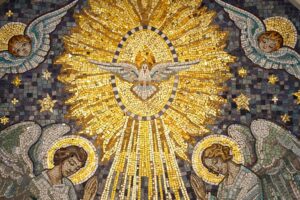
The Bible draws a stark contrast between the negative admonition to “not be drunk with wine” and the positive command to “be filled with the Spirit. ” I have found, however, that there is not much balance in the emphasis between these two commands in many of our evangelical circles. The positive command to be filled with the Spirit of God should be just as important to us as the negative one not to be drunk with alcoholic beverages. Think about lt. Next Sunday, what would happen if the preacher stumbled up to the pulpit, stammered through the reading of the Scripture with a slurred voice while staggering to and fro from one side of the pulpit to the other? A drunk preacher is in no condition to preach — we can all agree on that. But that is only half the story. A preacher who is not filled with the Spirit of God is equally in no condition to stand behind the sacred desk or preach.
Influence and power
Much of the issue with many today is found in two words: influence and power. Look at the early believers in Jerusalem. They had little political capital and zero influence with virtually anyone. They did not even have enough Influence to keep Peter out of prison. But they had enough power to pray him out (Acts 12).
What a difference the church could make in our world if we rediscovered the difference between having influence and having spiritual power by being filled with the Spirit. The result of the Spirit’s fullness in our lives is always a new source of power. Jesus said, “You shall receive power.” When? “When the Holy Spirit has come upon you” (Acts 18).
When we are not being filled with God’s Spirit, we grieve Him. The Bible admonishes us, “Do not grieve the Holy Spirit of God, by whom you were sealed for the day of redemption” (Ephesians 4:30). Most of us have at some point in life experienced real grief and can remember the emotion it brings. But did you know that when we are not allowing the Spirit to control every aspect of our lives, we are grieving Him? We can also quench His work when we do not allow Him to fill us with His presence and power. We are admonished not to “quench” the Holy Spirit (1 Thessalonians 5.19). That means a person who is not filled with God’s fullness can actually quench or stymie the work of God in themself or in others.
More of Him
God’s desire is that in place of always trying to get more of Him (remember He is a person, not a substance), we instead give Him more of us, daily surrendering every area of our lives to His Lordship, coming clean in daily confession, crowning Him as Lord of all, and claiming His promise that we can be filled by faith. Our greatest need is power to overcome and live in victory, and the same Spirit who raised Christ from the dead lives in me and in you. As a believer you have no more option in being filled than you do in whether you will make your house payment or pay your taxes. It is God’s command: “Be filled with the Spirit!” (Ephesians 5:18).
Taken from The Spirit Code by O.S. Hawkins. Copyright © 2024 by Dr. O.S. Hawkins. Used by permission of Thomas Nelson. O.S. Hawkins, a native of Fort Worth, Texas, is a graduate of TCU (BBA) and Southwestern Baptist Theological Seminary (MDiv, PhD). He presently serves as Chancellor at Southwestern Baptist Theological Seminary. He is the former pastor of the historic First Baptist Church in Dallas, Texas, and is President Emeritus of GuideStone Financial Resources, the world’s largest Christian-screened mutual fund serving 250,000 church workers and Christian university personnel with an asset base exceeding twenty-five billion dollars, where he served as President/CEO from 1997-2022. Hawkins is the author of more than fifty books, including the best-selling Joshua Code and the entire Code series of devotionals published by HarperCollins/Thomas Nelson with sales of more than three million copies. Criswell: His Life and Times is the sequel to his previous book, In the Name of God: The Colliding Lives, Legends, and Legacies of J. Frank Norris and George W. Truett.
He was recently inducted into the White Rose Society by Israeli President Isaac Herzog for his long-standing support of the State of Israel and the Jewish people. He is married to his wife, Susie, and has two daughters, two sons-in-law, and six grandchildren. Visit him at OSHawkins.com and follow him on X (Twitter) @OSHawkins.
For more Good News, read the GOOD NEWS May 2026 Issue at: https://digital.goodnewsfl.org/2026/may/